


Chip Package Encapsulation
Precision encapsulation dispensing for semiconductor chip packages — QFN, DFN, SIP modules, hybrid packages and custom encapsulated devices requiring moisture, mechanical and chemical protection.
Reliable Encapsulation Dispensing for Semiconductor Chip Packages
While transfer molding with epoxy molding compound remains the dominant encapsulation method for high-volume standard IC packages, an increasing range of semiconductor products — QFN and DFN leadframe packages in specific configurations, system-in-package (SiP) modules, hybrid circuits, multi-chip modules and low-to-medium volume custom devices — rely on liquid dispensed encapsulation instead. Dispensed encapsulation offers advantages that transfer molding cannot match for these applications: no mold tooling investment, compatibility with mixed component heights on a single substrate, and the flexibility to encapsulate only selected areas of a package while leaving others — connectors, optical windows, RF antennas — completely exposed.
The dispensing challenge in chip package encapsulation is filling the package cavity or forming the glob top dome completely around delicate wire bonds without bridging adjacent bond wires, without creating voids that would fail moisture sensitivity testing, and without overflow contaminating package leads, optical windows or connector interfaces. For SiP modules integrating multiple dies of different heights, the encapsulant must flow to fully cover the tallest component while maintaining controlled total package height — a balance that requires precise volume control and validated material rheology.
SANCO desktop visual dispensing machines and offline potting machines provide the precision volume control, vision-guided keep-out boundaries and multi-material capability required for chip package encapsulation across QFN, DFN, SiP and hybrid package applications.
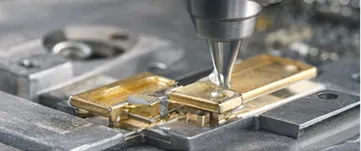
Why Chip Package Encapsulation Demands Precise Process Control
Dispensed chip package encapsulation must protect delicate wire bonds and dies while avoiding contamination of leads, connectors and optical interfaces.
Wire Bond Wash-Out Prevention
Encapsulant flow during dispensing can displace or deform fine wire bonds (as thin as 18–25 µm gold or copper wire) if dispensed too aggressively. Dispensing flow rate and approach pattern must be controlled to avoid wire bond wash-out or bridging between adjacent wires.
Void-Free Fill Around Complex Topography
Wire bonds, die edges and substrate features create complex 3D topography that encapsulant must flow around completely. Voids trapped beneath wire loops or around die corners cause moisture sensitivity test failures and reduced thermal cycling reliability.
Lead Frame and Connector Keep-Out Compliance
QFN and DFN packages have exposed leads on the package perimeter that must remain free of encapsulant for board-level solder attachment. Dispensing boundary control must maintain a clean keep-out zone within 0.1–0.2 mm of the lead edge.
Mixed Component Height Coverage
SiP modules and hybrid circuits integrate multiple dies and passive components of varying heights on a single substrate. Encapsulant volume must be calculated to fully cover the tallest component while controlling total package height within specification.
Moisture Sensitivity Level (MSL) Compliance
Encapsulated packages must achieve the target Moisture Sensitivity Level classification (typically MSL1–MSL3) per JEDEC J-STD-020. Void content, encapsulant adhesion and material selection all affect MSL performance and must be validated together.
Selective Encapsulation for Hybrid Functionality
Packages combining digital, RF and optical functions on one substrate require selective encapsulation that protects sensitive areas while leaving optical windows, RF antennas or connector interfaces completely free of encapsulant.
Key Capabilities for Chip Package Encapsulation
Low-Stress Dispensing for Wire Bond Protection
Controlled flow rate and dispensing approach pattern minimise encapsulant impact force on fine wire bonds, preventing wire wash-out or bridging during the fill process.
CCD Vision Lead Keep-Out ±0.1 mm
Vision-guided dispensing boundary control maintains a clean lead keep-out zone on QFN and DFN packages, ensuring board-level solderability is preserved after encapsulation.
Heated Barrel for Controlled Flow Viscosity
Barrel temperature control optimises encapsulant viscosity for complete flow around wire bonds and complex topography without excessive flow that could cause bridging or overflow.
Variable Dispense Volume for Mixed-Height Packages
Programmable dispense volume per package position accommodates SiP modules with components of varying heights, ensuring full coverage of the tallest element within a single dispensing pass.
Vacuum Degassing Integration
Optional vacuum degassing station removes entrapped air from dispensed encapsulant before cure, supporting void content targets required for MSL1–MSL3 compliance.
Selective Encapsulation for Hybrid Packages
Programmable keep-out zones protect optical windows, RF antennas and connector interfaces from encapsulant contact while fully covering sensitive die and wire bond areas.
Package Layout CAD Import
Import package substrate or lead frame CAD data to auto-generate dispensing boundaries and volume calculations for each package design — reducing NPI programming time.
Inline Assembly Line Integration
SMEMA-compatible conveyor integration links SANCO encapsulation equipment between wire bonding, dispensing and cure oven stations in automated semiconductor assembly lines.
The Chip Package Encapsulation Process Step by Step
Chip package encapsulation requires careful flow control around delicate wire bonds with precise keep-out boundary management. SANCO equipment supports every stage.
Package Pre-Bake & Wire Bond Inspection
Assembled package pre-baked to remove moisture. Wire bond integrity confirmed by inspection before encapsulation begins.
Encapsulant Preparation
Material conditioned to dispensing temperature. Two-component systems mixed at specified ratio with viscosity verified before production dispensing.
Controlled Cavity Fill or Glob Top Dispensing
SANCO machine dispenses encapsulant with controlled flow rate to protect wire bonds, maintaining lead or connector keep-out boundaries within specification.
Degassing & Self-Level
Dispensed material vacuum-degassed or vibrated to remove air, then self-levels for a controlled period to achieve uniform surface profile.
Cure & Reliability Sampling
Thermal cure per material TDS. Sample units undergo MSL testing, thermal cycling and cross-section analysis to verify package reliability before full production release.
Chip Package Encapsulation Material Types & SANCO Compatibility
SANCO dispensing and potting machines handle the encapsulation materials used across QFN, DFN, SiP and hybrid semiconductor package applications.
| Material Type | Viscosity Range | Cure Method | Typical Application | SANCO Compatibility |
|---|---|---|---|---|
| Liquid Epoxy Molding Compound (Glob Top) | 5,000 – 40,000 mPa·s | Thermal 150°C, 1–4 h | Glob top dome encapsulation over wire-bonded die on lead frame or substrate; MSL1–MSL3 capable | Recommended |
| Cavity Fill Encapsulant (QFN/DFN) | 3,000 – 25,000 mPa·s | Thermal 150–175°C, 1–2 h | Cavity fill encapsulation for QFN and DFN packages with exposed lead keep-out requirements | Recommended |
| Two-Component SiP Encapsulant | A: 1,000–10,000 / B: 500–5,000 mPa·s | Thermal 100–150°C, 1–2 h | Variable-height encapsulation for system-in-package modules with multiple die and component heights | Recommended |
| UV-Cure Encapsulant (Selective) | 2,000 – 15,000 mPa·s | UV 365 nm + thermal post-cure | Rapid-handling encapsulation for hybrid packages requiring fast in-process tack-free state | Recommended |
| Low-Stress Silicone Encapsulant | 1,000 – 8,000 mPa·s | Thermal 100–150°C | Stress-sensitive die encapsulation for MEMS and pressure sensor hybrid packages requiring minimal package stress transfer | Recommended |
Frequently Asked Questions
How does SANCO prevent wire bond wash-out during cavity fill encapsulation?
SANCO dispensing machines use controlled, low-velocity dispensing approach patterns combined with optimised needle positioning that introduces encapsulant gradually around the package perimeter rather than directly onto wire bonds. Flow rate is calibrated during process development for each package design to ensure encapsulant flows around bonds without sufficient force to deform or displace them. Contact our application engineers for wire bond protection process validation.
Can SANCO machines maintain lead keep-out zones on QFN packages during encapsulation?
Yes. SANCO's CCD vision-guided dispensing maintains lead keep-out boundaries within ±0.1 mm, ensuring exposed QFN and DFN leads remain free of encapsulant for board-level solder attachment. Boundary accuracy is validated against the specific package lead frame design during process qualification.
How does SANCO handle variable component heights in SiP module encapsulation?
SANCO offline potting machines support programmable dispense volume per package, calculated to ensure the tallest component on the substrate is fully covered while maintaining the target total package height. For SiP modules with significant height variation, multi-pass dispensing programmes can apply encapsulant selectively to different zones.
What void content can SANCO achieve for MSL-compliant chip package encapsulation?
With vacuum degassing integration, SANCO machines achieve void content below 0.5% by volume in dispensed encapsulant, sufficient to meet MSL1 through MSL3 classification requirements per JEDEC J-STD-020 when combined with appropriate material selection and cure profile.
Can SANCO equipment perform selective encapsulation for hybrid packages with optical or RF elements?
Yes. SANCO dispensing machines program keep-out zones around optical windows, RF antenna structures and connector interfaces, allowing selective encapsulation that protects only the intended areas of a hybrid package while leaving functional interfaces completely exposed.
Where can I learn about other semiconductor packaging dispensing applications?
Visit our Applications section for guides covering die attach dispensing, wafer-level packaging, glob top protection and dam and fill processes. For equipment specifications, see our dispensing machine and potting machine product pages.